
The Dances
The roots of many Turkish dances can be traced to Central Asian shaman rituals, while also reflecting the influence of the many ethnic groups encountered during the Turks’ long westward migration. The diversity of that history appears in the colourful regional dances of Anatolia.
Across Türkiye, folk dance and folk music belong together. Dances are performed at weddings, gatherings, festivals, friendship meetings, association meetings, seymenlik ceremonies, seasonal celebrations, holidays, and many other traditional occasions.
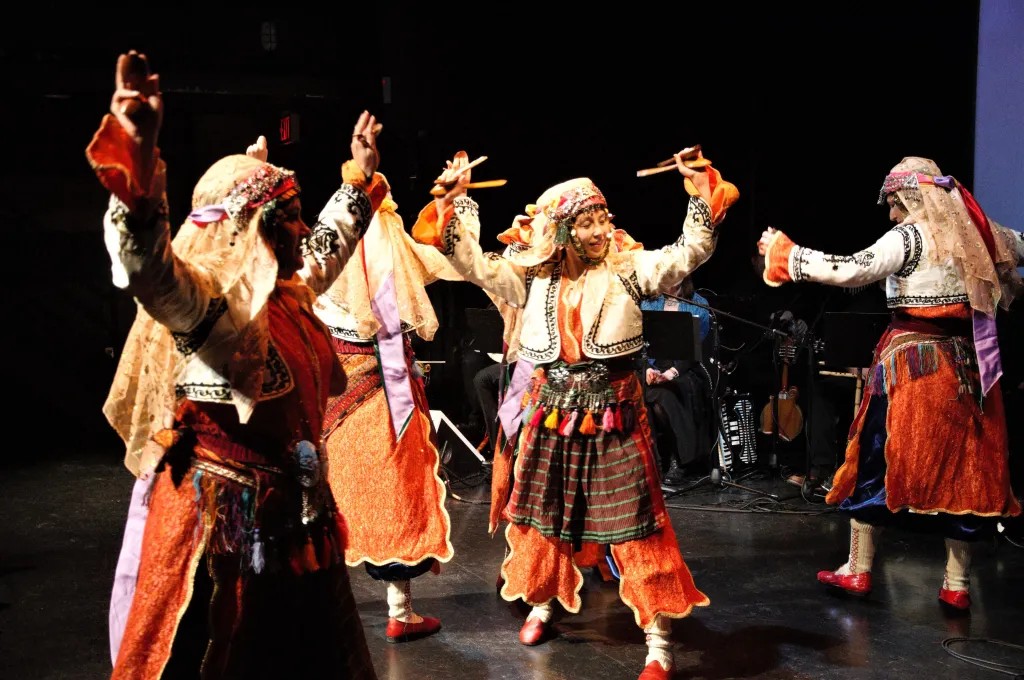
Afyon Dinar
These dances belong to the “Kırık Zeybek” tradition of the Aegean region. They are danced by women, who hold wooden spoons in both hands. Instruments may include davul, zurna, sipsi, bağlama, cura, and kabak kemane.
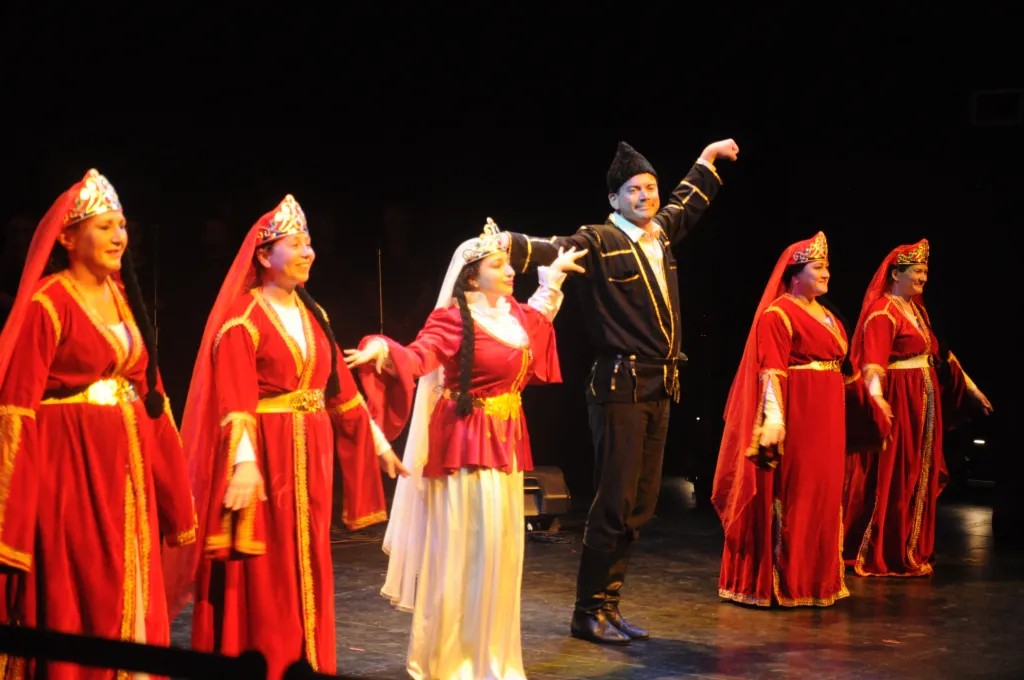
Kafkas
Kafkas dances from north-eastern Türkiye are known for increasing speed and difficulty. They express love, grace, nobility, bravery, and jealousy, while also reflecting social and ceremonial life. Their style emphasizes agility, speed, and control.
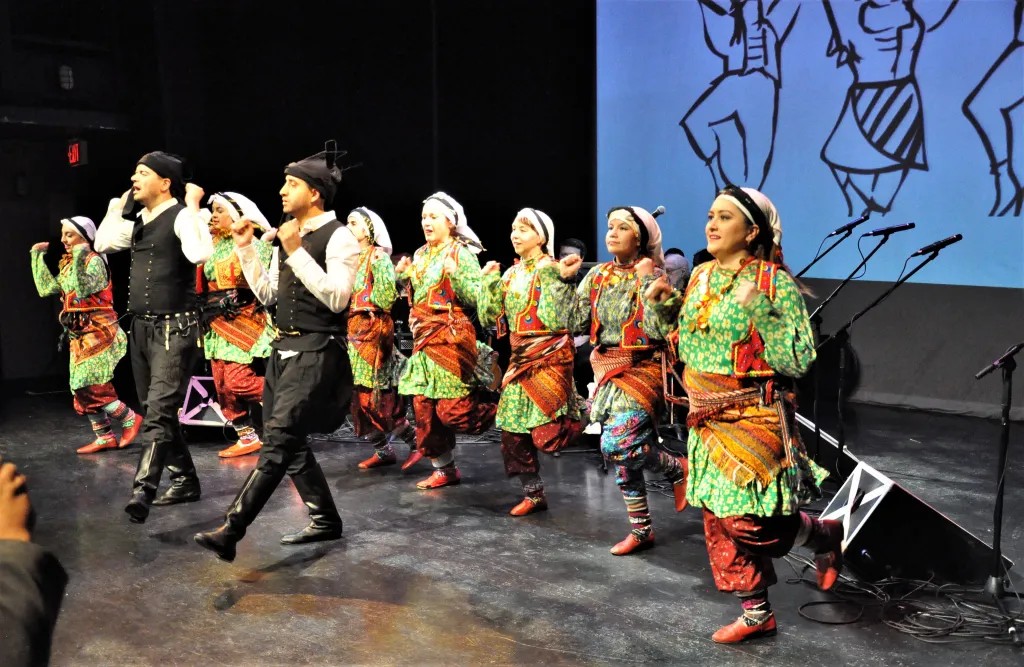
Karadeniz
On the Black Sea coast, Horon dances are fast, energetic, and full of trembling movements. They reflect the force of the sea, the mountains, and the region’s famous fish, the hamsi. The dances usually grow faster as they progress.
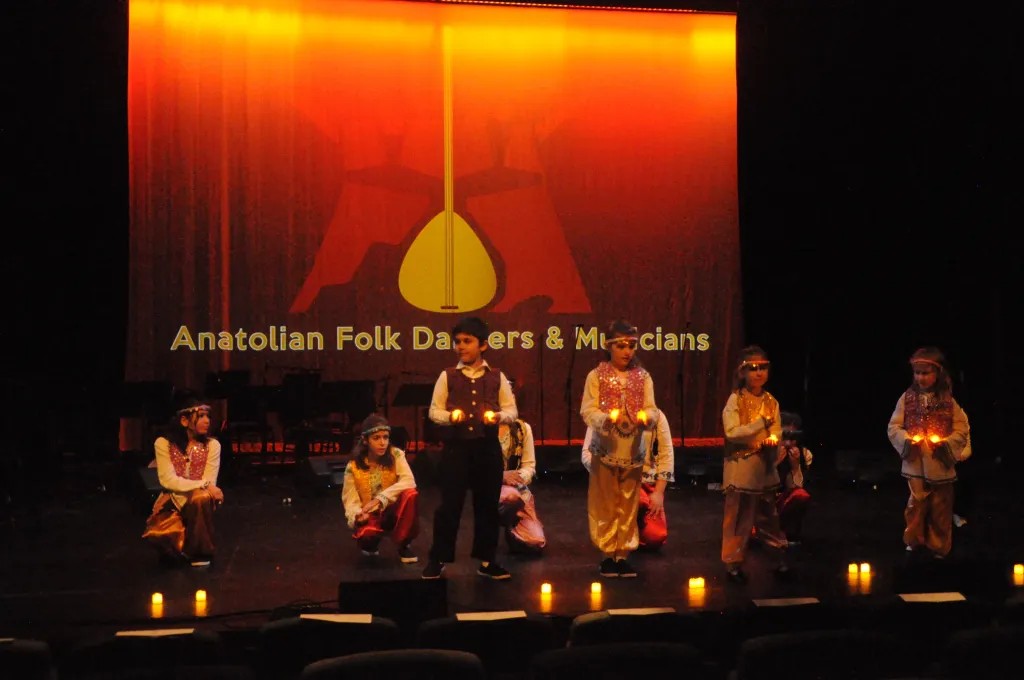
Çayda Çıra
This dance from Elazığ is inspired by a wedding party crossing a creek during a solar eclipse. To mark their way, the people lit small twigs. The glowing lights across the water inspired the folk song and the dance.
Adıyaman
Dances from Adıyaman often depict cultivation of the land and daily village life. They are commonly accompanied by davul and zurna. A favourite is Galuç, a dance from Hallun village that tells the story of villagers clearing a poisonous weed from the fields before celebrating together.
Artvin
Artvin dances reflect the rugged landscape of north-east Türkiye: mountains, rivers, waterfalls, and the Black Sea. Men often dance in circles representing solidarity, while women’s dances may depict everyday tasks such as spinning yarn. Common dance families include Bar and Horon.
Kırklareli
Kırklareli is known for lively Hora and Karşılama dances. Karşılama means “meeting” or “greeting,” and the dances often depict people gathering together. Dancers may hold hands or rest arms on shoulders, and performances include solos, groups, and duets.
Silivri
Silivri also belongs to the Hora tradition of north-western Türkiye. These dances begin slowly and finish with very quick, lively rhythms. Performed in circles, lines, or semi-circles, they express joy, sadness, and sometimes heroism.
Çiftetelli
A popular dance across Türkiye, çiftetelli is usually performed by women, though men also join in. It is simple, expressive, and suited to celebrations and social occasions.
Silifke
Silifke, on the Mediterranean coast, is strongly associated with spoon dances. These dances grew out of Turkmen and Yorük life, reflecting migration, regional history, nature, and everyday work. Rhythm is central, and dancers often use wooden spoons with great skill.
Aşuk Maşuk
Aşuk Maşuk is an imitation play of dwarfs from the Taşeli district of Silifke. It is performed by two male dancers, one costumed as a male dwarf and the other as a female dwarf, with body make-up used to exaggerate the faces and create the comic effect.
Harmandalı
Harmandalı is a western Anatolian dance of courage, self-confidence, and heroism. It is often described as a victory dance, with the dancer’s proud walk and knee-to-ground movement symbolizing honour and strength.